Service-Based Businesses Are the Backbone of the Economy — And Skilled Labor Has Never Been More Valuable
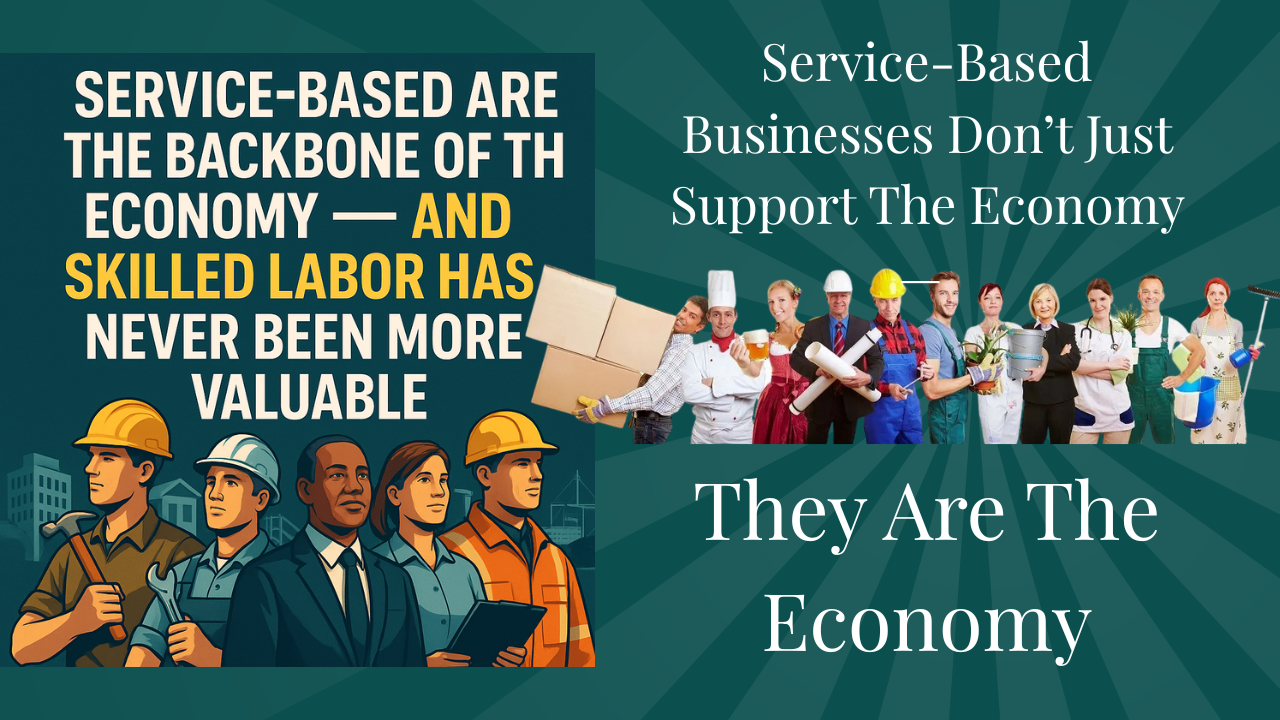
Walk through any neighborhood, industrial park, medical corridor, port, or commercial district and you’ll see it: the real economy is built and maintained by service-based businesses.
Not just “services” like coaching and consulting (those matter too), but the businesses that keep life moving:
- Maintenance and facilities
- Construction and specialty trades
- Transportation and logistics
- Offshore and maritime operations
- Insurance, risk, and financial protection
- Real estate services and development support
When these businesses run well, communities run well. When they’re understaffed or mismanaged, everything slows down—projects stall, costs climb, customers churn, and opportunity gets left on the table.
And right now, demand is winning.
Why Service-Based Businesses Matter More Than Ever
Service-based businesses do three things the world can’t function without:
1) They solve urgent, non-optional problems
A roof leak, a broken HVAC unit, a damaged bulkhead, a facility that fails inspection, a claim that needs proper coverage, a crew shortage offshore—these aren’t “nice-to-haves.”
They’re must-fix-now problems.
That urgency creates pricing power, repeat demand, and long-term customer relationships—if the business is structured correctly.
2) They scale locally and expand regionally faster than people realize
Unlike many product companies that need national distribution to grow, service businesses can:
- dominate a zip code,
- expand to the next city,
- then multiply through crews, routes, partnerships, and referrals.
Service businesses grow by reputation + execution + systems. That’s a blueprint.
3) They build durable wealth
Service businesses produce:
- predictable cash flow,
- asset value (contracts, accounts, equipment, teams),
- and expansion leverage (management layers, dispatch, sales ops, partnerships).
In other words: real businesses with real economics.
The Skilled Labor Gap Is the Opportunity
For the last several years—and now accelerating—one issue keeps surfacing across trades and operational industries:
There aren’t enough skilled people to meet demand.
Not just “workers.” Skilled labor. Reliable operators. Trained technicians. People who can deliver quality under pressure.
That gap creates opportunity in three directions:
A) Opportunity for business owners
If you can recruit, train, and retain talent, you can win markets that competitors can’t even service.
B) Opportunity for individuals
If you develop skills in high-demand areas—construction trades, facility systems, maritime operations, specialty maintenance, sales/service leadership—your income ceiling rises fast.
C) Opportunity for organizations that build the bridge
The biggest winners aren’t only the businesses doing the work. It’s also the groups that build the pipelines:
- training programs
- workforce development
- certifications + mentorship
- employer partnerships
- retention systems
This is where strategy becomes everything.
The Part Most People Miss: Great Service Businesses Aren’t “Built by Hustle” — They’re Built by Architecture
Most service businesses start the same way:
“I’m good at the work. I can do the job.”
That’s step one.
But the jump from $150K–$300K owner-operator to $1M–$10M scalable company is not about working harder.
It’s about building a machine:
- lead flow
- sales process
- operations and scheduling
- hiring and training
- quality control
- customer retention
- vendor relationships
- financial structure
- risk management
- partnerships and capital access
This is business architecture.
And it’s the difference between “busy” and “bankable.”https://www.manfreandassociates.com/

Manfre And Associates | Business Management Consultant
Manfre And Associates Consulting Services calls for coaching and consulting . Trust the local experts to get the job done!
3 Decades Behind the Scenes: Manfre & Associates Consulting Services as the Business Architect
For nearly three decades, Manfre & Associates has been behind multiple startup wins—often not as the face of the brand, but as the team behind the strategy.
Over the years, that has meant stepping into the work where many founders struggle:
- Strategic partnerships that unlock contracts, distribution, and leverage
- Marketing and positioning that turns “a service” into “a market leader”
- VC and growth relationships—helping the right operators connect with the right capital and networks
- Operational design—systems that scale beyond the owner
- Risk and protection—insurance planning and business continuity strategy
- Real estate strategy—location, expansion, and asset-backed planning
- Maintenance and construction planning—service delivery built for reliability and margin
- Offshore / maritime transportation and training—where precision, safety, talent, and logistics define outcomes
That range matters because service-based businesses don’t exist in silos. Real growth happens at the intersection:
people + operations + capital + marketing + execution.
And that’s where business architecture lives.
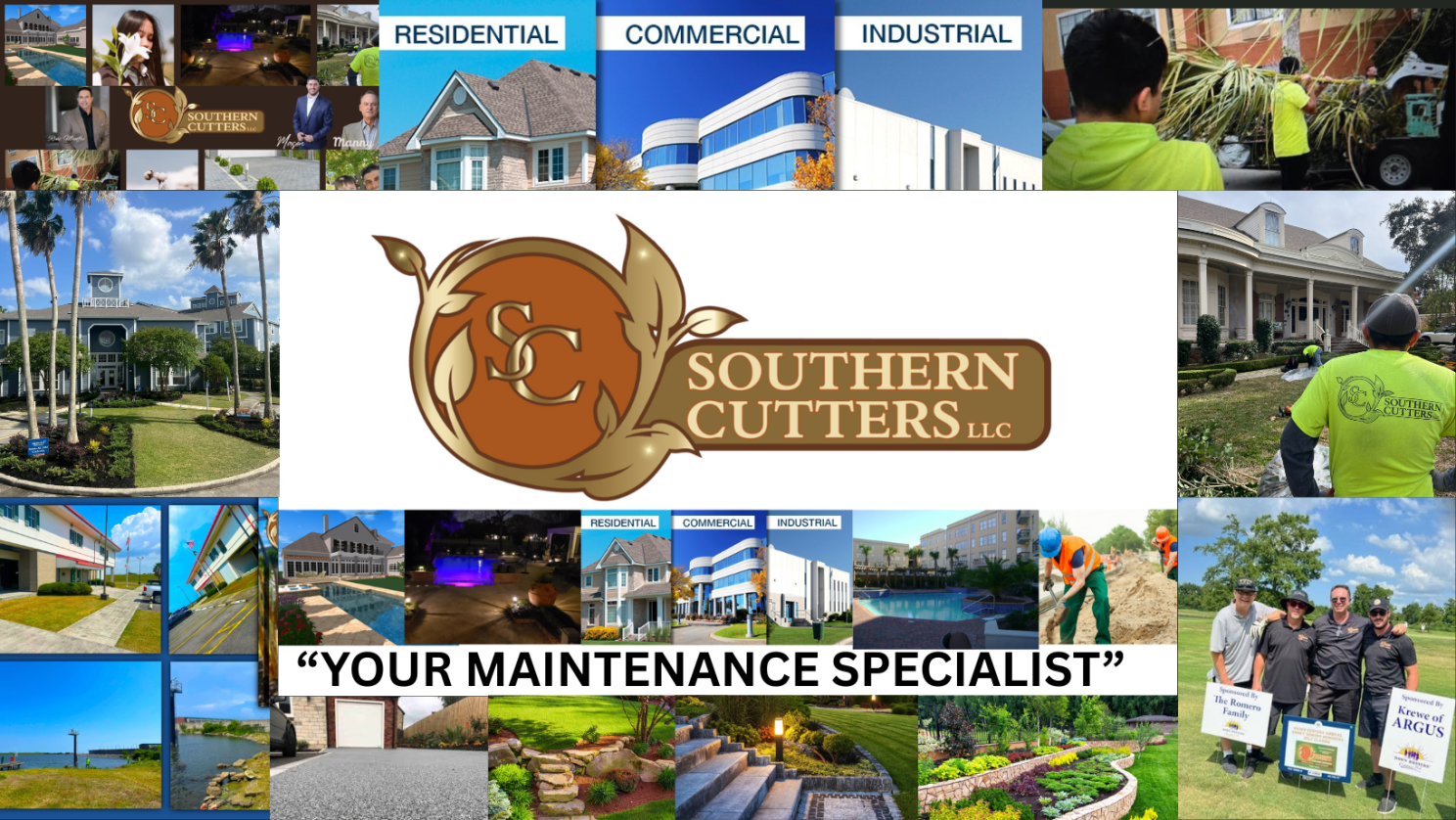
SOUTHERN CUTTERS ( 7 FIGURE BUSINESS)
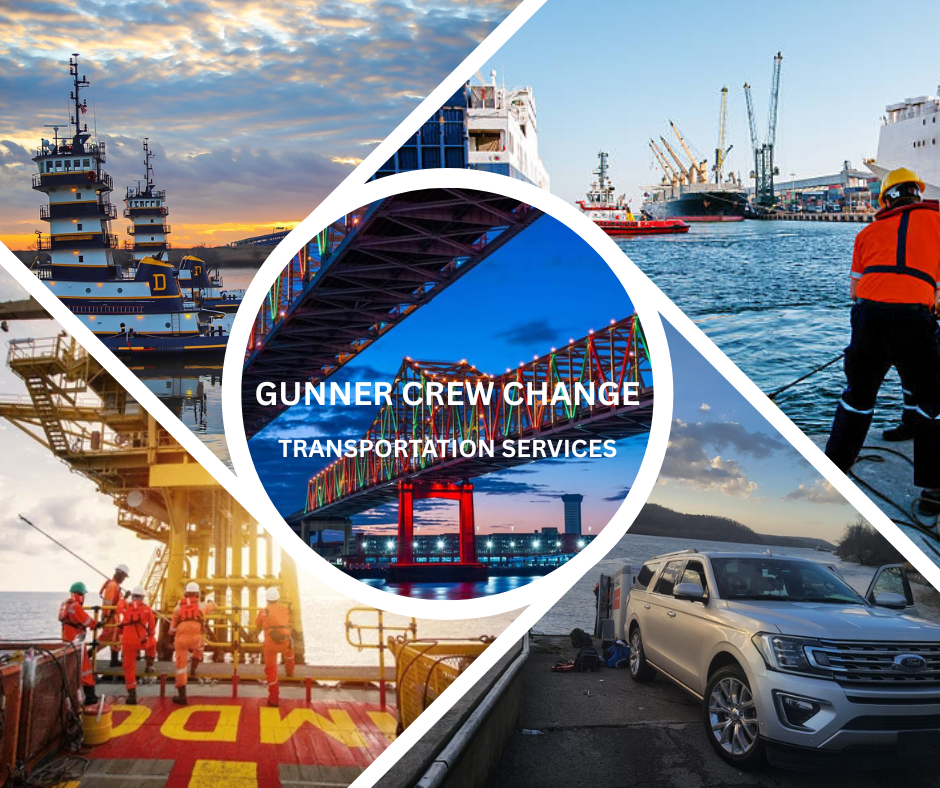
GUNNER CREW CHANGE ( 7 FIGURE BUSINESS)
Learn More about The STEP BY STEP GUIDE FOR 2026 that White Husky Uses.
2025: A Growth Year — 2026: The Scale Year
2025 has been a growth year, but the real focus now is scaling into 2026—because the market conditions are clear:
- demand is strong,
- labor is scarce,
- and businesses with systems will dominate.
But scaling doesn’t mean “doing more.”
Scaling means doing less of the wrong things and doubling down on what works:
- build stronger teams
- lock in predictable lead channels
- add strategic partnerships
- tighten delivery standards
- raise pricing with confidence
- design operations that don’t break
- create a brand that attracts both customers and talent
That’s how you build 6- and 7-figure outcomes that last.
The 6–7 Figure Service Business Playbook That Actually Works
Here are the strategies that repeatedly separate “local operator” from “regional powerhouse.”
1) Pick a lane that has recurring demand
Examples:
- commercial grounds and property services
- facility maintenance contracts
- specialty coatings and exterior systems
- HVAC / plumbing / electrical routes
- restoration and remediation
- maritime crew support / transport
- insurance + risk services for business owners
- real estate services supporting expansion and asset management
Recurring demand creates stability, hiring confidence, and higher valuation.
2) Productize the offer (yes, even in services)
Stop selling “we do everything.”
Start selling packages:
- tiered service plans
- maintenance bundles
- response-time guarantees
- compliance-ready inspections
- seasonal + annual contracts
Productized services sell faster, train easier, and scale cleaner.
3) Build a real sales system, not just referrals
Referrals are great—but they’re not a strategy.
A real system includes:
- lead sources (local SEO, partnerships, outbound, community, B2B networking)
- scripts and standards
- pipeline tracking
- follow-up cadence
- estimates that close
- upsells and renewals
Sales is the engine. Operations is the vehicle. You need both.
4) Turn labor into a pipeline (not a constant emergency)
The best service companies do 3 things relentlessly:
- recruit every week
- train every week
- develop leaders every month
When labor is scarce, the company with a pipeline wins.
5) Partnerships beat advertising in many service industries
Some of the strongest growth comes through:
- property managers
- GCs and subcontractor networks
- insurance agents and brokers
- real estate investors
- maritime operators and vendors
- municipalities and facility directors
- manufacturers and distributors
Partnerships create trust at scale.
6) Build margin on purpose
Most service businesses don’t have a revenue problem.
They have a margin problem.
Margin comes from:
- accurate estimating
- job costing
- route efficiency
- scheduling discipline
- reducing rework
- upsells and renewals
- team accountability
- vendor pricing control
Revenue makes you busy. Margin makes you free.
7) Use capital strategically (not emotionally)
Capital can accelerate:
- equipment acquisition
- expansion into new markets
- hiring key leadership
- marketing investment
- acquisitions of small competitors
But capital without systems just grows the chaos.
The goal is simple: Build the machine first. Then fuel it.
The Real Message Going Into 2026
Service-based businesses are not “small.” They are not “second tier.” They are not “backup plans.”
They are:
- the foundation of real economies
- the fastest path to stable wealth for millions
- the best place to build 6–7 figure income with practical execution
- the biggest opportunity in a world where skilled labor is scarce
And the businesses that will win in 2026 are the ones that treat service like a craft—and treat growth like architecture.
That’s the lane Manfre & Associates has lived in for decades: helping founders and operators build the partnerships, systems, protection, and strategy that turn skill into scale.
Because in this new economy, the winners won’t just be the people who work hard.
They’ll be the people who build it right.
Let's collaborate and build together. SCHEDULE A CALL