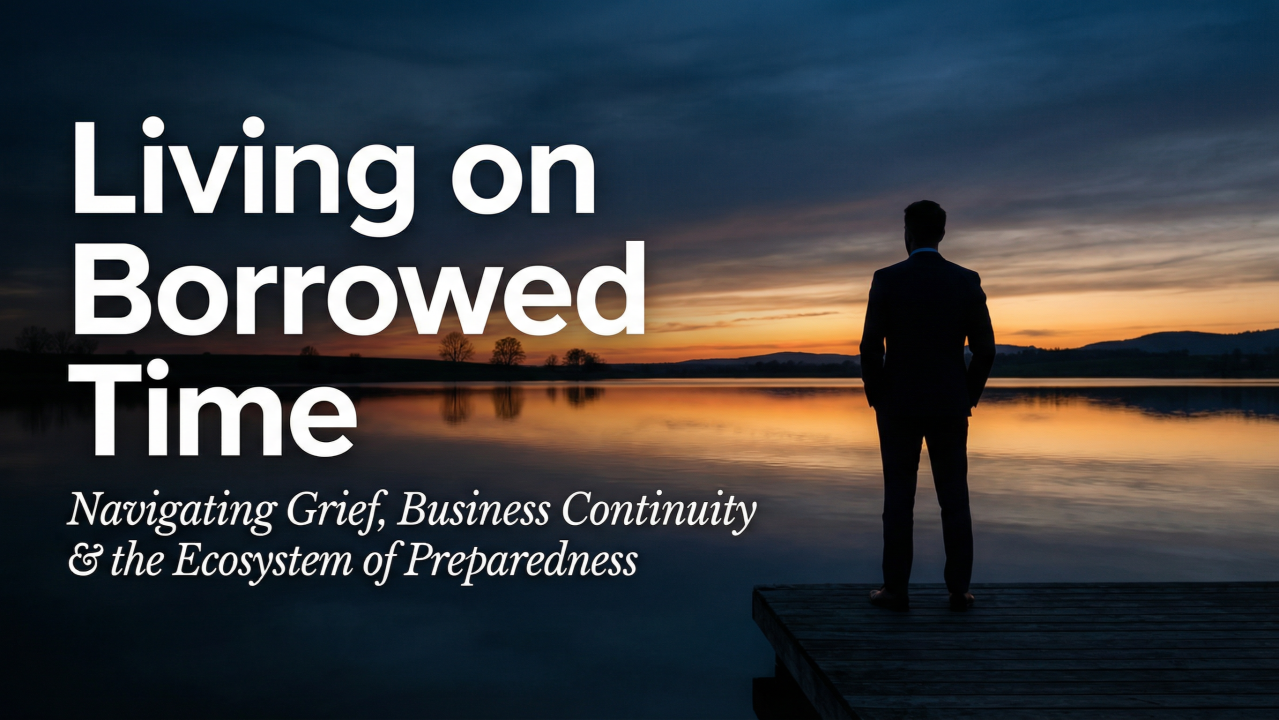
Living on Borrowed Time: Navigating Transitions, Grief, and the Ecosystem of Preparedness
By Rene' Manfre
Over the past few weeks, I have been confronted with a profound and sobering reality: the sudden and unexpected passing of people who hold significant places in my life. These moments force a hard pause, making you stop and reevaluate everything.
Yet, I find myself caught in a relentless cycle. No matter who passes away, or how deeply it affects us, there are times when we simply are not afforded the space to stop, feel, and rationalize the moment—especially when the loss is sudden.
Just this past Saturday morning, right in the middle of a business meeting, I received a text message from an old colleague. It was a brief, jarring note expressing condolences for the passing of my friend, Sam. It caught me completely off guard. I later searched on Facebook and realized it had happened on Friday. Sam was not just a good friend; he was also a business partner. We had just launched a new initiative in the insurance infrastructure space. We were excited, ramping up our weekly conversations and support structures. This loss hit incredibly close to home. Yet, even though my heart and mind desperately wanted to stop and process the grief, the calendar was unforgiving. I had business calls set up for the week ahead that could not be ignored.
Then, on Sunday, I received another call. Another good, old friend had passed away. And still, the mandate remained: I have to keep moving.
This feeling of forced momentum is not new to me. I remember the morning my mother passed away. Even though we were prepared for it, the shock was still paralyzing. Despite the profound personal loss, I found myself taking calls throughout the day, ensuring that current business processes kept running and that people kept moving.
The Illusion of Control and the Reality of Borrowed Time
As entrepreneurs, leaders, and driven professionals, we face unique physical and mental struggles. We pour our souls into building enterprises, often at the expense of our own well-being. I am the first to admit my own guilt in this—I frequently find myself working far more than I play. It is a daily gamble, much like sitting at a casino table where the odds and our endpoints are entirely unknown.
The stark truth is that we are all living on borrowed time. We never know when or why our time will be up, but that day comes for everyone. I share these personal reflections not to dwell on the sorrow, but to highlight a universal truth: no matter what we do, how wealthy we become, or how massive the businesses we work so hard to develop grow to be, we cannot take any of it with us. Living and dying are two interconnected realities we are all faced with, yet we spend so much of our energy solely focused on the former while willfully ignoring the latter.
The Silent Anxiety of Aging and Transition
Beyond the sudden shock of loss, there is another, quieter transition we all must face as we grow older. Aging brings about profound changes that many of us are entirely unprepared for. As we move into the later chapters of our lives, a deep sense of fear, uncertainty, and anxiety often sets in.
One of the most difficult realities for high-performing individuals to accept is the inevitable shift in our cognitive and physical capacities. The fear of losing our sharp edge—of not being able to make decisions as quickly or as decisively as we did in the past—can be paralyzing. For leaders who have spent their entire lives relying on their intellect and rapid-fire problem-solving skills, this transition can induce severe anxiety. Without preparation, this uncertainty can compromise both personal well-being and the businesses we have built.
Furthermore, there is a stark financial reality that cripples many as they approach these later stages of life. I see many individuals who are at an age where they should be comfortably retired, yet they find themselves trapped.
A staggering percentage of adults approaching retirement age have not been able to save enough to sustain the lifestyle they expected or are used to. This lack of financial preparedness forces many to continue working out of necessity rather than choice, adding immense stress to years that should be characterized by peace and reflection. This, too, is all part of the process of life we live.
The Imperative of Preparation: Emotionally, Financially, and Operationally
Whether facing the sudden loss of a partner or the gradual transitions of aging, the weight of leadership and life can feel crushing. You have to prepare in multiple dimensions—emotionally, financially, and operationally. You cannot simply shut down the machinery of your business, because others depend on it. But you also cannot ignore your humanity or your future.
The solution lies in proactive preparation and the strategic leveraging of teams. You must build a structure that allows you to step back when life demands it, and safeguards your future when your capacity naturally shifts.
Developing Your Ecosystem of Partners
Safeguarding your business and your peace of mind requires more than just a standard contingency plan; it requires building a resilient ecosystem of partners. This means:
1. Cultivating a Leveraged Team: Surround yourself with capable individuals who are empowered to make decisions in your absence or when you choose to step back. Delegation is not just a management tactic; it is a survival strategy for the aging entrepreneur.
2. Implementing Succession and Continuity Plans: Clearly define what happens if a key partner or leader is suddenly unavailable, or when it is time to transition leadership due to age. Buy-sell agreements, key-person insurance, and clear operational hand-offs are critical.
3.Comprehensive Financial Planning: Building wealth that outlasts your active working years is essential. This requires honest assessments of your retirement readiness long before the transition occurs.
4.Fostering a Culture of Support: Build relationships with partners and vendors who understand your vision and can step in to provide stability during turbulent times or gradual transitions.
When you have a trusted ecosystem in place, the business can sustain its momentum, granting you the invaluable grace period needed to grieve, heal, and navigate the complexities of growing older.
In memory of a few good friends and dear family members...